Nevertheless, an index is still a tool of judging health and disease, based on sound physical principles. The Body Mass Index signifies the ratio of the mass of the body to the surface area of the body. It is defined as BMI = bodyweight (kg)/ square of height (meters). Since the square of height is very closely associated with the surface area of the skin, the BMI describes the heat transfer from the body mass through the skin. Example, if you take a cube of side length L, the ratio of the mass of the cube to its surface area is (LxLxL)/(6xLxL). That gives L/6 (at constant density). Where as a sphere of diameter L has the exact ratio of mass to surface area despite the smaller size of the sphere. Thus, the rounding of the sphere lends its mass greater access to the surface than in the case with the cube.
The waistline has been gaining greater significance as an index of the state of health as it represents the immediate stress on the vital organs that control the blood circulation and gas exchange. A greater waistline signifies strained kidneys, strained lower back, embarrassed lungs, and overburdened heart. Thus, the greater waistline affects the flow of fluids and gases within the lungs and belly, as well as the flow of nerve signals between the brain the lower body.
Greater waistline is closely associated with development of high blood pressure, diabetes, hyperlipodosis, heart attack, and stroke. Yet, Both BMI and waistline is directly related to the flow of energy from the pumps (heart and muscles) to the terminal tissues of the body, in addition to the dissipation of energy of metabolic burning. For example, an obese individual would fare better in cold weather than in hot weather, due to the limited surface area of the overweight person to his/her inner body mass. In birds, geese could tolerate this freezing pond better than birds that lack thick fat coat under their skin.

The waistline is a true index of the lifestyle of the individual. The belly gets congested and crowded with excess of food remains and fat when the individual consumes more calories and burns less. The crowded belly spills its pressure over the surrounding organs. The lower limbs suffer more of the tourniquet squeeze of the belly. The weakened limbs limits the mobility of the individual with great waistline. The limited mobility worsens the congestion of the belly. The vicious circuit continues, with more organs suffering from the crowded and distended belly.
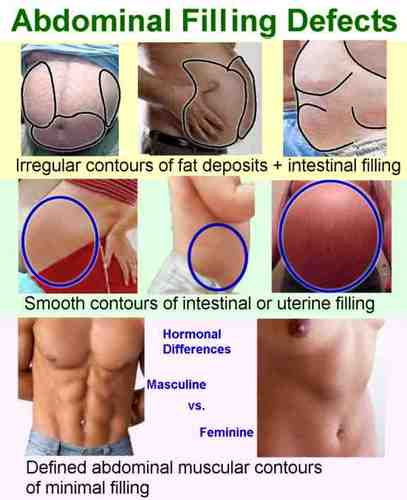
Things get really nasty when the individual with troubled belly attempts to alleviate his suffering with alcohol or smoking. Alcohol aggravates the motor function of the locomotive limbs, which were already strained with distended belly. Smoking deprives the blood from its oxygen carrying ability and thus worsens the strength of the limbs to endure mobility. With such double insult, with alcohol consumption and cigarette smoking, the individual with large waistline digs deeper and deeper into illness and poor health.
Now, the crammed belly induces pressure trauma on the kidneys, spine, and blood vessels in the vicinity of the destined intestines. The trauma causes a vicious circuit of healing, scarring, weakness, and shrinking of tissues.

On the opposite side, exercise improves circulation and breathing and assists the belly in riding itself from the crowing food remains or fat deposits, or enables the belly to function better with such burdensome intruders.

No comments:
Post a Comment